Bank of America Q3 Earnings Miss: Credit Loss Provisions Hit $1.30B
Seeking Alpha · October 14, 2026
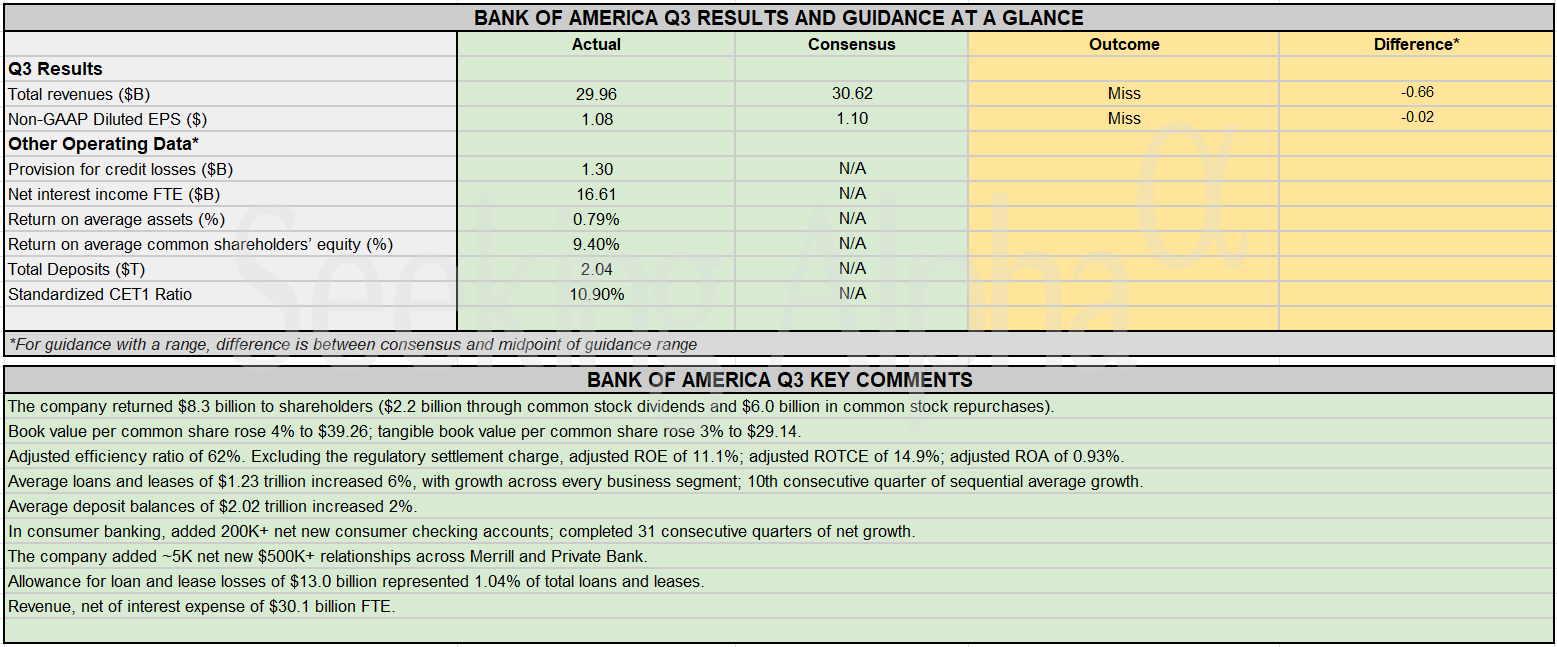
Key takeaways
- Bank of America's Q3 revenue and EPS both came in below analyst estimates.
- The bank's provision for credit losses rose to $1.30 billion, signaling increased caution about loan repayment risk.
- As a major bank bellwether, BofA's results could foreshadow how other large banks perform this earnings season.
What Happened
Bank of America just posted a Q3 earnings report that came in below Wall Street's expectations on both the top and bottom line. The headline number drawing the most attention: the bank's provision for credit losses jumped to $1.30 billion, a signal that BofA is bracing for more borrowers to struggle with repayments.
A "provision for credit losses" is essentially money a bank sets aside because it expects some loans won't get paid back in full. When that number rises, it usually means the bank's internal models are flagging more risk in its loan book — whether that's from consumers carrying higher credit card balances, commercial borrowers feeling squeezed by rates, or just a more cautious outlook heading into next year.
Why Revenue and EPS Fell Short
Missing both revenue and earnings-per-share estimates in the same quarter is notable for a bank of BofA's size. It suggests pressure wasn't limited to one segment — it's showing up across the business, whether that's net interest income, trading revenue, or fee-based services. Combined with the bigger credit loss cushion, the quarter reads as the bank playing defense rather than offense.
For context, big banks like Bank of America are often viewed as a bellwether for the broader economy. When a bank this large sets aside more money for potential loan losses, investors and analysts tend to read it as an early warning sign about consumer and business financial health — not just a BofA-specific issue.
What Investors Should Watch Next
The immediate market reaction to an earnings miss is usually share price pressure, but the more important story is what management says on the earnings call. Watch for commentary on:
- Whether the credit loss increase is tied to a specific segment (credit cards, commercial real estate, auto loans)
- Guidance for Q4 and into 2026
- Any changes to net interest margin expectations as rate policy evolves
The Bigger Picture
Bank earnings season is often treated as a preview of broader market health, and BofA is one of the first dominoes to fall in that sequence. A soft quarter here doesn't necessarily mean trouble across the entire sector, but it does raise the bar for peers reporting in the days ahead. If other major banks post similar credit loss increases, that's a stronger signal that lenders across the board are preparing for tougher conditions ahead.
For everyday readers, this isn't just a Wall Street story — bank caution on lending often trickles down to things like credit card rates, loan approval standards, and how willing banks are to extend new credit in the months ahead.
Why it matters
Bank of America is one of the largest lenders in the U.S., so a rise in credit loss provisions can hint at broader economic stress for consumers and businesses. If you have a BofA account, hold the stock, or are watching the market for recession signals, this earnings miss is worth paying attention to.
Want deals on what you love?
Val finds local offers matched to your interests — free to start.
Meet Val