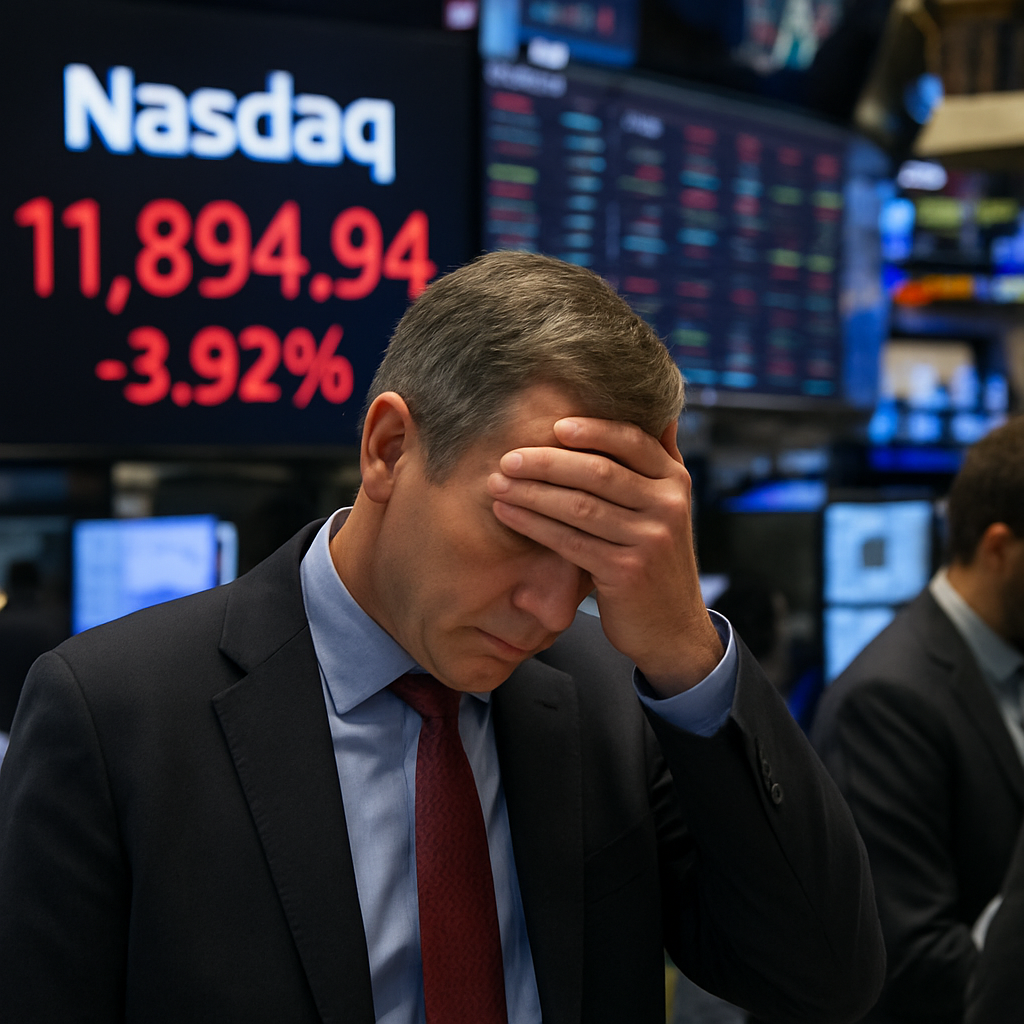
Nasdaq Plunges 3-4% as Wall Street Selloff Deepens: What's Driving It
Seeking Alpha · November 25, 2026
Key takeaways
- The Nasdaq fell sharply — between 3% and 4% in a single session — in a broad market selloff that also dragged down the S&P 500 and Dow.
- Valuation worries in tech and AI-linked stocks, Fed rate uncertainty, and bond market jitters are driving the renewed selling pressure.
- Investors should watch upcoming Fed signals, bond yields, and whether the decline broadens or stays concentrated in mega-cap tech.
What Happened
Wall Street took a hard hit as the Nasdaq Composite plunged between 3% and 4% in a sharp risk-off session, dragging the S&P 500 and Dow Jones Industrial Average lower alongside it. The tech-heavy index bore the brunt of the selling, with growth and momentum names leading the decline as investors rushed toward safer ground.
Why the Selloff Hit Now
This kind of broad-based drop rarely comes from a single headline — it's usually a combination of pressures converging at once. Renewed concerns about stretched valuations in the tech and AI-adjacent sectors have been simmering for weeks, and when sentiment turns, high-multiple growth stocks tend to fall the hardest and the fastest. Add in uncertainty around the Federal Reserve's next moves on interest rates, jittery bond markets, and profit-taking after a strong run for tech stocks earlier in the year, and you get the kind of cascading selling that wipes out gains in a single session.
Markets have been on edge lately over whether AI-driven spending can keep justifying sky-high valuations, and any sign of hesitation from investors can trigger fast, outsized moves — especially in a market where passive flows and algorithmic trading amplify both the ups and the downs.
What It Means for Everyday Investors
If you've got money in index funds, a 401(k), or individual tech stocks, days like this sting — but they're also a normal part of market cycles, especially after extended rallies. The Nasdaq's heavy weighting toward a handful of mega-cap tech names means it tends to swing harder than broader indexes like the S&P 500 or Dow in both directions.
For long-term investors, the playbook rarely changes: avoid panic-selling into a dip, especially if your investment horizon is years rather than days. For traders and anyone watching short-term positions, volatility like this often brings follow-through selling before stabilizing, so expect choppy sessions ahead rather than an immediate snapback.
What to Watch Next
Keep an eye on a few things in the days ahead: how mega-cap tech earnings and guidance hold up, what the Fed signals about rate policy heading into year-end, and whether bond yields keep climbing (higher yields make growth stocks less attractive by comparison). Volume and breadth — how many stocks are participating in the decline versus just a few giants — will also tell you whether this is a broad correction or a narrower tech pullback.
Market pullbacks like this tend to generate headlines fast, but the real story plays out over the following week or two as investors figure out whether this is a healthy reset or the start of something bigger.
Why it matters
A sharp Nasdaq drop affects far more than day traders — it ripples through 401(k)s, index funds, and retirement accounts tied to tech-heavy portfolios. Understanding what's driving the selloff helps everyday investors separate normal volatility from a real shift in market direction.
Want deals on what you love?
Val finds local offers matched to your interests — free to start.
Meet Val