Ben Gvir Leads Hundreds to Al-Aqsa Compound on Jewish Mourning Day
naharnet · July 24, 2026
Key takeaways
- Ben Gvir led hundreds of Jewish worshippers into Al-Aqsa on Tisha B'Av, with open prayer breaching the decades-old status quo agreement.
- The arrangement, managed with Jordan's religious trust, allows Jewish visits but bars Jewish prayer at the site to preserve uninterrupted Muslim worship.
- Jordan, the Palestinian Authority, and Muslim religious bodies condemned the visit, continuing a pattern of similar incidents in recent years.
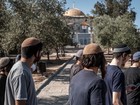
What Happened Israeli far-right National Security Minister Itamar Ben Gvir walked into Jerusalem's Al-Aqsa mosque compound on Thursday with hundreds of Jewish worshippers in tow, timing the move to Tisha B'Av — the Jewish fasting day mourning the destruction of the First and Second Temples. AFP footage showed settlers lining up since early morning to enter the site, with many openly praying once inside. Ben Gvir posted video of the visit to Telegram, declaring that Jews "feel that they are the rightful owners here" and that Israel is recognized as the site's sovereign authority.
Why This Breaks the Rules Al-Aqsa sits in Israeli-annexed east Jerusalem and holds dual sacred status: it's Islam's third holiest site and, on the same ground, the location where Judaism's ancient temples once stood. For decades, a status quo arrangement between Israel and Jordan — whose religious trust (the Waqf) administers the compound — has tried to keep the peace. Jews can visit, but not pray there. Muslim worship is supposed to continue without interruption. That's the deal that's kept a fragile calm over one of the world's most contested religious sites.
Ben Gvir's visit didn't just bend that arrangement — it openly defied it. Worshippers praying at the site, filmed and broadcast by the minister himself, is exactly the kind of act the status quo was designed to prevent.
The Bigger Pattern This isn't a one-off. Ben Gvir and other Jewish nationalist figures have repeatedly pushed past the limits at Al-Aqsa in recent years, treating each visit as both a religious statement and a political one. Jordan condemned Thursday's visit, adding to a growing list of formal objections from Amman, the Ramallah-based Palestinian Authority, and Muslim religious bodies who see this as a slow-motion erosion of the compound's status.
Why It Keeps Happening Ben Gvir leads a minority but influential far-right faction in Israeli politics, and Al-Aqsa visits have become a recurring way to signal sovereignty claims over Jerusalem to his base. Each incident risks inflaming tensions well beyond the compound itself — the site has historically been a flashpoint that can trigger regional unrest, making these visits closely watched far outside Israel and the Palestinian territories.
What to Watch Expect continued diplomatic pushback from Jordan and the Palestinian Authority, along with the possibility of further visits timed to Jewish holidays or political moments. Whether Israel's government moves to formally curb these incursions — or continues to tolerate them — will be a signal worth tracking for anyone following the broader Israeli-Palestinian dynamic around Jerusalem's holy sites.
Why it matters
Al-Aqsa is one of the most sensitive religious flashpoints in the world, and repeated breaches of its status quo carry real risk of escalating regional tensions. Understanding these incidents helps readers follow the deeper fault lines shaping Israeli-Palestinian relations and Jerusalem's contested holy sites.
Want deals on what you love?
Val finds local offers matched to your interests — free to start.
Meet Val