Canada Wildfire Smoke Triggers Air Quality Emergencies Across US Midwest, Northeast
ABC News · July 17, 2026
Key takeaways
- Nearly 900 Canadian wildfires, over 100 out of control, are sending smoke into 12+ US states across the Midwest and Northeast.
- Philadelphia issued a Code Purple Air Quality Emergency; Detroit, Cleveland, Pittsburgh, and D.C. have the worst air Friday.
- Incoming rain could help some fires but may also bring lightning and wind that spark new blazes — so conditions remain unpredictable.
What's Happening
Smoke from nearly 900 wildfires burning across Canada — more than 100 of them out of control — has drifted south into the US, triggering hazardous air quality alerts across more than a dozen states. Philadelphia declared a rare Code Purple Air Quality Emergency Day on Friday, meaning even healthy people could feel the effects of breathing the air outside.
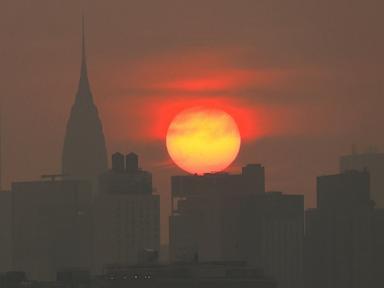
The smoke stretches from Duluth, Minnesota all the way to Richmond, Virginia, blanketing major metro areas including Detroit, Cleveland, Pittsburgh, Washington D.C., New York City, and Philadelphia. Photos from New York show the sun and skyline shrouded in an eerie haze, with the Empire State Building and Chrysler Building barely visible through the smoke.
Why This Is Happening Now
Ontario alone is dealing with nearly 200 active wildfires, and the fire season has been especially aggressive this summer. Some relief is on the way — heavy rain is moving over the Minnesota/Canada border, and more rain chances are expected over Ontario from Sunday through Tuesday. But there's a catch: those same storms bring lightning and gusty winds, which can spark brand-new fires and make existing ones burn more erratically. So while rain might knock down some smoke temporarily, it's not a guaranteed fix, and things could get worse before they get better.
Who's Affected and How Bad Is It
The worst air quality Friday afternoon is concentrated in a corridor running from Detroit through Cleveland and Pittsburgh down to Washington, D.C. States under alert include Wisconsin, Michigan, Ohio, New York, Pennsylvania, New Jersey, Maryland, and Delaware. Officials are warning that particulate matter in the smoke can cause negative health effects for anyone, with people in sensitive groups — kids, older adults, and those with asthma, heart, or lung conditions — at higher risk of more serious symptoms.
What You Should Do
If you're anywhere in the affected zone, check your local air quality index (AQI) before heading outside, especially for exercise or extended time outdoors. On Code Purple or similarly bad days, health officials generally recommend limiting outdoor activity, keeping windows closed, running air purifiers or HVAC systems with clean filters if you have them, and wearing an N95 mask if you must be outside for a while. Sensitive groups should be especially cautious today and tomorrow.
What's Next
Keep an eye on weather updates through the weekend. The rain forecast for Ontario between Sunday and Tuesday could eventually help slow the fires, but expect air quality to remain unpredictable in the meantime as wind patterns shift the smoke around. This is shaping up to be a recurring story this wildfire season, so it's worth checking air quality alerts regularly if you live in the impacted region.
Why it matters
If you live anywhere from Minnesota to Virginia, this smoke could directly impact your health today, especially if you have asthma, heart issues, or are older or younger. Knowing your local air quality before you step outside can help you avoid unnecessary exposure.
Want deals on what you love?
Val finds local offers matched to your interests — free to start.
Meet Val