Abdul El-Sayed Wins Michigan Senate Race After Bruising GOP Attack Campaign
aurorasentinel · November 5, 2026
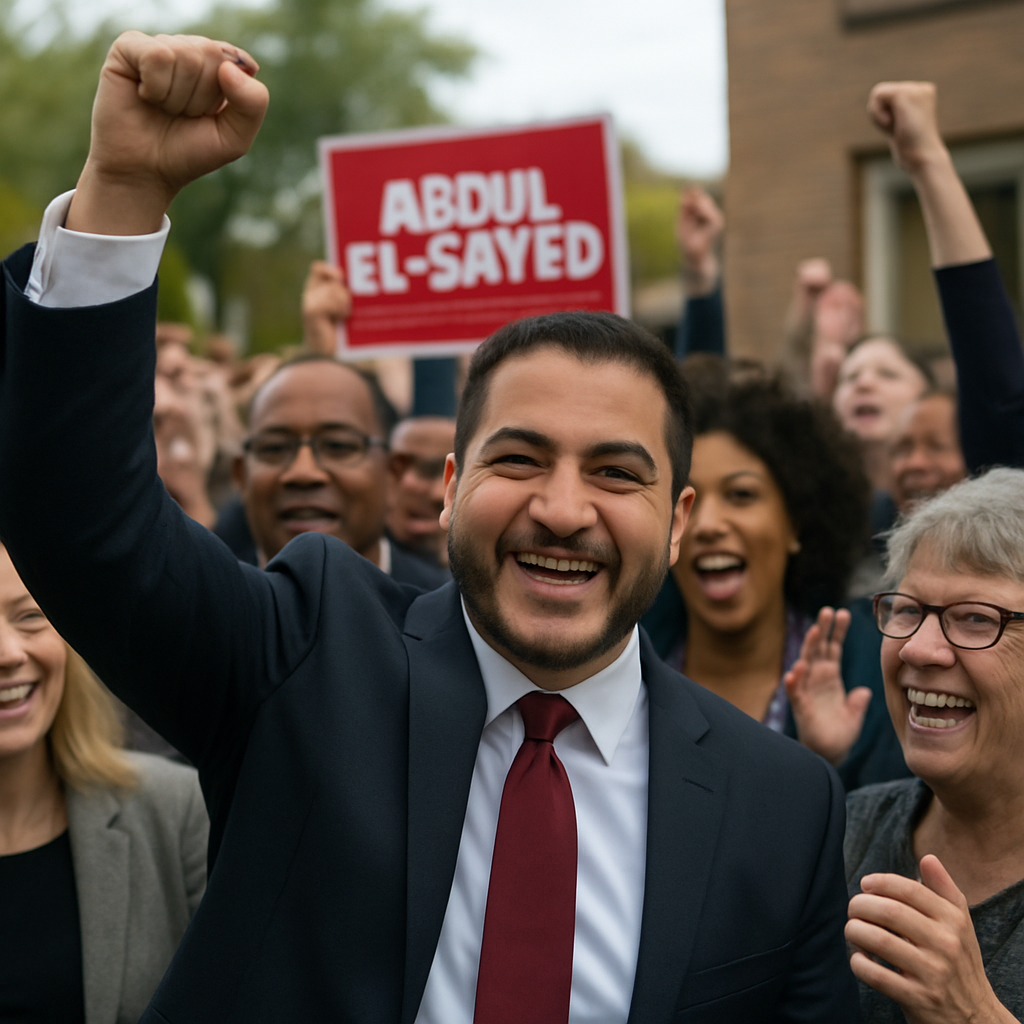
Key takeaways
- Abdul El-Sayed told the AP that Michigan voters rejected a Republican campaign he called 'hateful' and 'spiteful' after months of personal attacks.
- El-Sayed, a physician and former Michigan health official, has long been a target of identity-based opposition messaging.
- The race is seen as a potential signal for how swing-state voters respond to attack-heavy campaigns versus policy-focused messaging.
What Happened
Abdul El-Sayed says Michigan voters sent a message. In a post-election interview with the Associated Press, the Democratic Senate candidate described the race as one defined by a relentless, personal Republican attack campaign — and said the outcome proves voters weren't buying it. El-Sayed, a physician and former Michigan health director who first broke onto the national political scene with his 2018 gubernatorial run, called the opposition's strategy 'hateful' and 'spiteful,' pointing to months of attacks that leaned heavily on his identity and background rather than policy substance.
While the full scope of the attacks varied, El-Sayed framed his win (or strong showing, depending on final certification) as a rebuke of a campaign style he says tried to divide voters instead of talking about kitchen-table issues like health care costs, housing, and jobs.
Why the Attacks Happened
El-Sayed has long been a target for conservative opposition research and messaging, partly because he's one of the most visible Muslim American politicians in the country. Critics on the right have repeatedly tried to tie him to national political flashpoints rather than engage with his record on public health policy in Michigan. Supporters argue this is a familiar playbook — nationalize a local race, attach a candidate to hot-button cultural issues, and hope it overwhelms local concerns.
El-Sayed's response leaned into that contrast directly, positioning himself as focused on everyday Michigan concerns while his opponents, he argues, leaned on fear-based messaging.
What It Means Going Forward
This race is being watched closely as a bellwether for how Democratic candidates with diverse backgrounds perform in swing states when facing identity-based attacks. Michigan has been a pivotal battleground in recent election cycles, and a result like this could shape how both parties approach messaging in future statewide races — especially around how much weight personal-attack strategies carry with voters compared to pocketbook issues.
For Michigan specifically, the outcome also signals what kind of Senate representation voters want heading into the next legislative session, and whether El-Sayed's health-policy-first platform translates into influence in Washington.
The Bottom Line
El-Sayed's comments to the AP aren't just a victory lap — they're a direct challenge to how political campaigns are run in competitive states. Whether this becomes a turning point in campaign strategy or just one data point in a long trend remains to be seen, but it's a storyline worth following as more results and analysis roll in.
Why it matters
This race offers a real-time test of whether attack-driven campaign strategies still work in key swing states like Michigan. For voters following national politics, it's a window into how candidates with diverse backgrounds are navigating a tougher, more personal style of opposition messaging.
Source: Associated Press via Aurora Sentinel
Want deals on what you love?
Val finds local offers matched to your interests — free to start.
Meet Val