Mark Carney Admits Canada Will Miss Trudeau's Emissions Targets
m · June 30, 2026
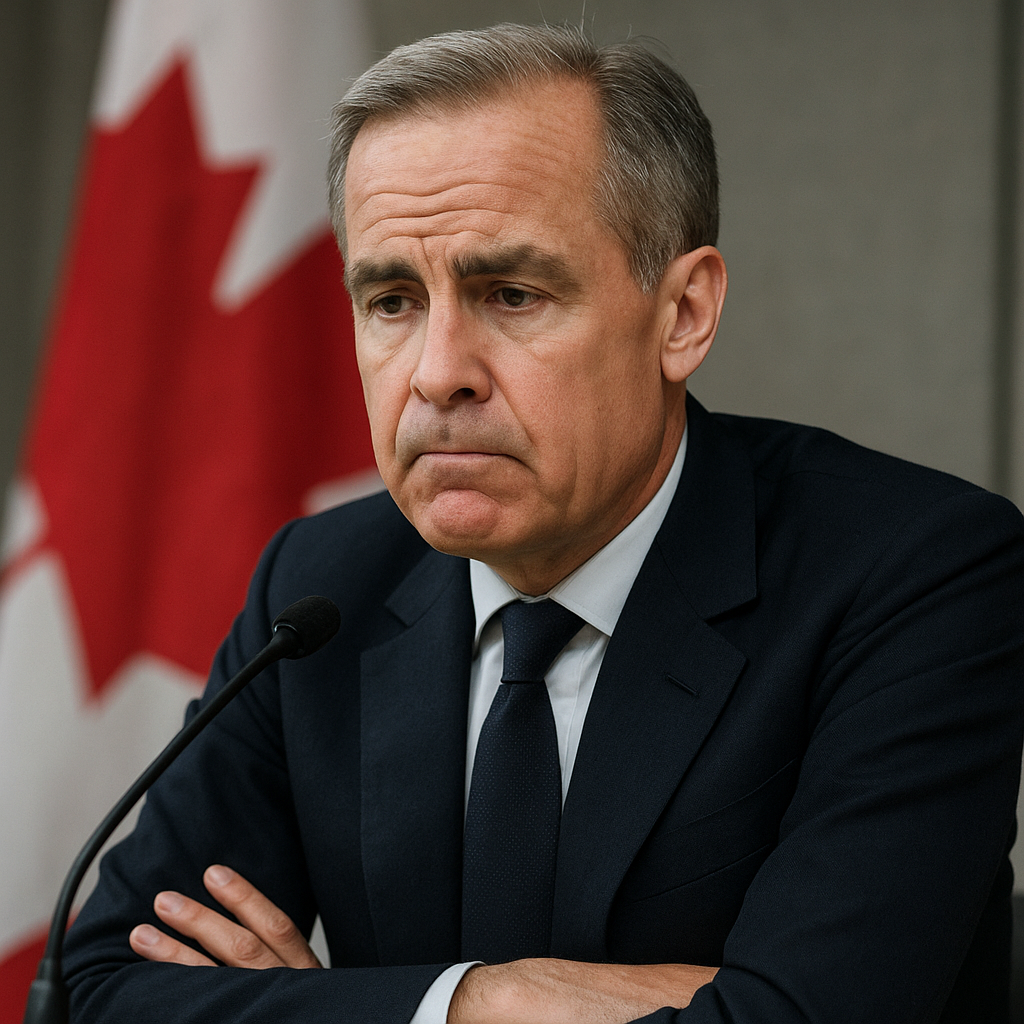
Key takeaways
- PM Mark Carney has publicly confirmed Canada won't meet the emissions benchmarks set under Justin Trudeau's government.
- The admission is notable because Carney built much of his international reputation on climate finance and net-zero advocacy.
- The move signals a likely reset of Canada's climate policy, with new targets or approaches expected to follow.
The Admission Mark Carney — once the UN's climate finance envoy and a central banker known globally for pushing green finance — just told Canadians something notable: the emissions targets set under Justin Trudeau's government aren't happening. Not "might miss," not "working on it." A direct acknowledgment that the benchmarks won't be met.
That's a big deal for a few reasons, starting with who's saying it.
Why Carney Saying This Matters Carney built his post-central-banking career on climate credibility. He ran the UN's climate action and finance mobilization effort, chaired a global coalition of banks and investors pledging net-zero commitments, and wrote a book essentially arguing that markets need to price in climate risk. If anyone was supposed to double down on aggressive emissions targets as prime minister, conventional wisdom said it'd be him.
Instead, he's the one publicly conceding Canada is off track from the goals Trudeau's government set. That's not necessarily hypocrisy — it could just as easily be read as pragmatism. Carney has spent his career around economic reality checks, and admitting a miss is different from abandoning the goal entirely.
The Bigger Picture Canada's emissions targets were always ambitious relative to its economy — a resource-heavy, energy-exporting country trying to align with international climate commitments while keeping oil, gas, and industrial sectors competitive. Trudeau-era targets faced criticism for years from provinces, industry groups, and economists who argued the pace was unrealistic without major economic disruption.
Carney stepping into leadership and immediately recalibrating expectations suggests his government may be preparing to reset climate policy altogether — potentially with new timelines, different mechanisms, or a shifted emphasis toward economic competitiveness alongside climate goals.
What Happens Next Expect this to become a flashpoint. Environmental groups will likely push back hard, framing this as a retreat from Canada's climate commitments. Opposition parties and energy-sector advocates may use it as validation that the original targets were unrealistic to begin with. And internationally, Canada's credibility on climate commitments — already scrutinized — will face fresh questions.
The real story to watch isn't just the missed benchmark — it's what Carney proposes instead. Does his government set new, more "achievable" targets? Push for different mechanisms like carbon pricing reform? Or quietly deprioritize climate policy in favor of economic and energy strategy? That answer will define how this moment gets remembered.
Why it matters
This is a major signal about the direction of Canadian climate and economic policy under new leadership. If you follow global climate commitments, energy markets, or Canadian politics, this admission suggests real policy shifts are coming — not just rhetorical ones.
Want deals on what you love?
Val finds local offers matched to your interests — free to start.
Meet Val