MS NOW Hosts Slam Trump's NYT Subpoena as 'All-Out Assault' on Press Freedom
thewrap · July 13, 2026
Key takeaways
- The Trump administration subpoenaed four NYT reporters after their story on Air Force One replacement jet safety concerns.
- MS NOW panelists, including Dan Nathan and Eddie Glaude, called the move an intimidation tactic resembling authoritarian governance.
- The subpoenas raise fresh press freedom concerns and could set a precedent for how the executive branch responds to critical reporting.
What Happened
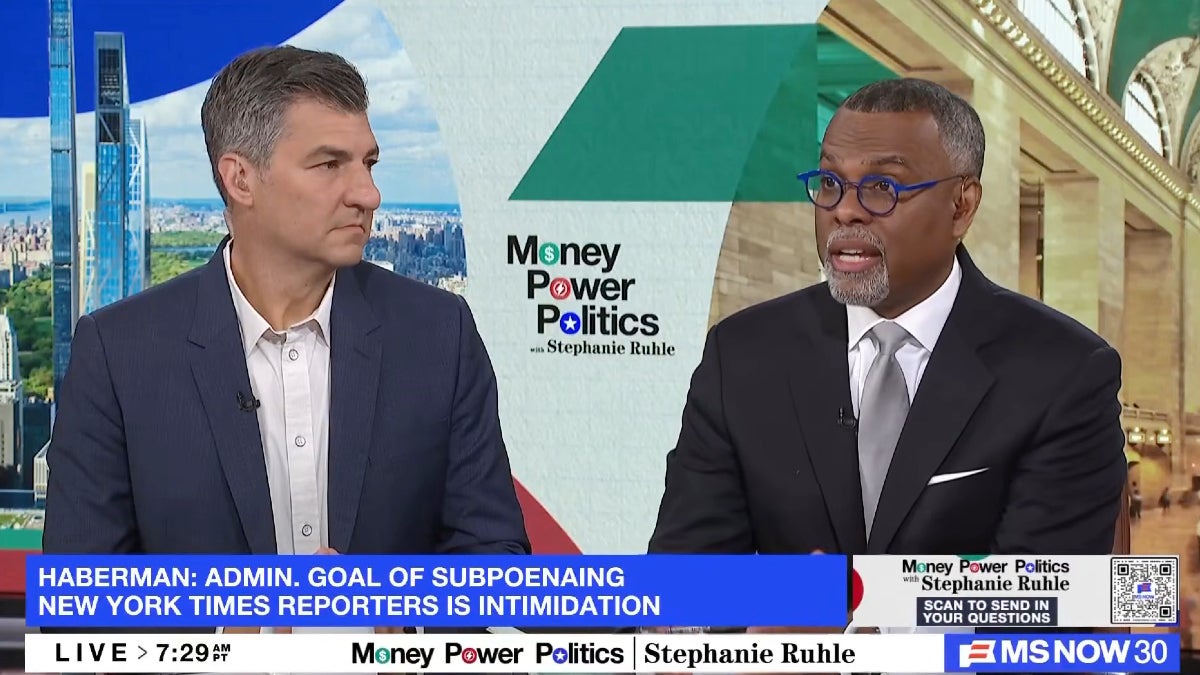
The Trump administration issued subpoenas over the weekend targeting four New York Times journalists — Julian E. Barnes, Eric Lipton, Tyler Pager and Eric Schmitt — after they reported on safety concerns tied to a jet meant to serve as the president's new Air Force One. The move sent shockwaves through media circles, and by Monday morning it was the top topic on MS NOW's "Money, Power, Politics with Stephanie Ruhle."
Panelists didn't hold back. CNBC contributor Dan Nathan called the subpoenas the kind of intimidation tactic "you would expect by an authoritarian state," while other guests, including Eddie Glaude, framed the action as part of a broader pattern of pressure campaigns against journalists who report unfavorable stories about the administration.
Why This Story Is Getting Attention
Subpoenaing reporters over a national security-adjacent story — in this case, aircraft safety — is rare and legally fraught. Journalists and press freedom advocates argue that using government legal power to compel reporters to reveal sources or testify chills investigative reporting, especially on stories involving executive branch operations like presidential travel and security.
The timing matters too. This isn't an isolated incident — it's landing amid a string of confrontations between the administration and major news outlets, feeding a narrative that the White House is increasingly willing to use formal legal tools against the press rather than just public criticism.
The MS NOW Reaction
On Ruhle's show, the tone was blunt. Hosts and analysts described the subpoenas as more than a policy disagreement — they characterized it as a direct challenge to the constitutional role journalists play in holding government accountable. Comparisons to authoritarian governance came up repeatedly, with panelists warning that legal intimidation of reporters sets a precedent that could outlast this administration.
What Happens Next
Expect the New York Times' legal team to push back, likely through motions to quash the subpoenas, and press freedom organizations to weigh in publicly. Watch for whether other outlets rally around the Times, and whether this becomes a bigger flashpoint in the ongoing tension between the White House and the press corps covering it.
The Bigger Picture
This story sits at the intersection of national security reporting, executive power and First Amendment protections. However it resolves legally, it's already becoming a talking point in the broader debate over how far a presidential administration can go in responding to unflattering coverage.
Why it matters
When the government subpoenas journalists over a story, it raises serious questions about press freedom and executive overreach. This case could shape how far future administrations go in pressuring reporters who publish unflattering coverage.
Want deals on what you love?
Val finds local offers matched to your interests — free to start.
Meet Val