Russia and North Korea Open First-Ever Road Bridge Across Border
naharnet · September 8, 2026
Key takeaways
- Russia and North Korea opened their first road bridge across the Tumen River, connecting Khasan and Rason.
- The bridge can handle up to 300 vehicles daily and is named after a Soviet officer tied to North Korean founding history.
- The opening reflects deepening Russia-North Korea cooperation, fueled by North Korea's military support for Russia's war in Ukraine.
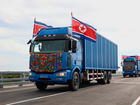
What Happened Russia and North Korea just opened their first-ever road bridge, connecting the two countries by land for the first time in a meaningful way. The bridge spans the Tumen River, linking the Russian border town of Khasan with North Korea's Rason. It's a modest structure on paper — 1 kilometer long, two lanes, capacity for up to 300 vehicles a day — but symbolically it's a big deal.
The crossing was named after Yakov Novichenko, a Soviet officer credited with saving North Korean founder Kim Il Sung from an assassination attempt back in 1946. That's not a random pick — it's a deliberate nod to the historical bond between the two nations, dating back to the Cold War era.
The opening ceremony was held simultaneously in both border cities, with Russian Prime Minister Mikhail Mishustin and North Korean Premier Pak Thae Song joining via video link to mark the occasion.
Why This Bridge, Why Now North Korea's border with Russia is tiny — just 17 kilometers, a sliver compared to its 1,400-kilometer border with China. But that small stretch has become increasingly important as Moscow and Pyongyang have drawn closer together, particularly since Russia's invasion of Ukraine.
North Korea has reportedly supplied troops and ammunition to support Russia's war effort, and in exchange has received economic and military assistance. This bridge is being framed as the next logical step: turning a wartime alliance into permanent physical infrastructure.
Mishustin called it a boost for "trade, economic, technological, scientific and cultural cooperation" between the two nations. Translation: this isn't just about moving trucks across a river — it's about formalizing a relationship that's grown far beyond military cooperation.
The Bigger Picture This bridge doesn't erase the fact that North Korea remains one of the most isolated countries on earth, heavily sanctioned and largely cut off from the global economy. But it does show that Pyongyang is actively building out its few open channels to the outside world — and Russia is happy to be the willing partner.
For Moscow, deepening ties with North Korea offers a workaround to Western sanctions and a reliable source of military support amid a grinding war. For Pyongyang, it's access to resources, legitimacy, and a powerful ally on the world stage.
Expect more announcements like this — new infrastructure, expanded trade routes, cultural exchanges — as the two countries continue building out what's becoming a genuinely strategic partnership, not just a wartime convenience.
Why it matters
This bridge is a physical marker of a fast-deepening alliance between two heavily sanctioned states, with implications for global security and the ongoing Ukraine war. Understanding this relationship helps make sense of shifting geopolitical alignments beyond the usual U.S.-China-Russia narrative.
Want deals on what you love?
Val finds local offers matched to your interests — free to start.
Meet Val