SpaceX Launch Creates Stunning 'Jellyfish' Cloud Before Sunrise
ABC News · October 14, 2026
Key takeaways
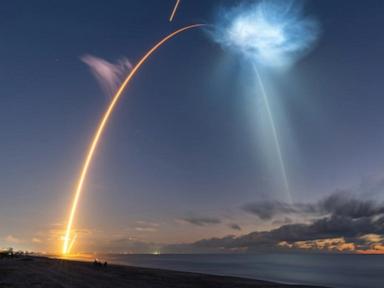
- A SpaceX launch to the ISS on October 13, 2026 created a glowing 'jellyfish' cloud visible along the East Coast before sunrise.
- The effect happens when a rocket's high-altitude exhaust plume catches sunlight before the ground below it does, scattering light into a glowing, tentacle-like shape.
- These twilight launch phenomena are rare and timing-dependent, which is why they go viral whenever conditions line up just right.
What Happened Early risers along the East Coast got an unexpected light show on October 13, 2026, when a SpaceX rocket launch toward the International Space Station lit up the pre-dawn sky with what's being called a "jellyfish" cloud. The glowing, tentacle-like plume stretched across the horizon, catching sunlight still below the horizon for viewers on the ground — a phenomenon that quickly had families stepping outside and pointing phones skyward.
Why It Looked Like a Jellyfish This isn't a new trick, but it's always a showstopper. When a rocket launches close to sunrise or sunset, it climbs into sunlight before the ground around it does. The exhaust plume — full of ice crystals and gas — scatters that high-altitude sunlight in every direction, creating a glowing, expanding halo that trails behind the rocket like a jellyfish's bell and tentacles. Add in high-altitude winds that stretch and twist the plume, and you get the surreal, almost otherworldly shape that lit up timelines overnight.
SpaceX launches are no stranger to these "twilight phenomenon" clouds, but the early-morning timing of this ISS resupply or crew mission made it especially visible to people waking up along the coast, rather than the usual late-night crowd.
Why People Can't Stop Watching Part of the appeal is how rare the timing has to be to pull this off. Too early, and the rocket is still in darkness with no sunlight to catch. Too late, and the sky is already bright enough to wash out the glow. The window is narrow — usually just the hour or so before or after sunrise or sunset — which is exactly why these clouds go viral every time they happen. It's a reminder that space launches aren't just a Florida or Texas spectacle anymore; they're becoming a recurring, photogenic part of everyday sky-watching for millions on the East Coast.
What To Know If You Want to See One Yourself SpaceX publishes launch schedules in advance, and the "jellyfish" effect is most likely during launches scheduled within an hour of local sunrise or sunset. If you're hoping to catch the next one, check launch trackers, step outside a few minutes before liftoff, and look toward the direction of the coastal launch site. Clear skies help, but even hazy mornings have produced dramatic photos in the past.
The Bottom Line This particular mission was a routine SpaceX trip ferrying cargo or crew to the ISS, but the sky show it created was anything but routine. As launch frequency keeps climbing, expect more of these glowing, only-in-the-right-window moments to keep showing up in people's morning commutes — and their camera rolls.
Why it matters
As SpaceX ramps up launch frequency, these striking sky phenomena are becoming a more regular part of life for East Coast residents, turning routine ISS resupply missions into viral, shareable moments. Knowing why it happens makes it easier to catch — and appreciate — the next one.
Want deals on what you love?
Val finds local offers matched to your interests — free to start.
Meet Val