Why U.S. Borrowing Rates Are Near a 20-Year High Right Now
feeds · September 15, 2026
Key takeaways
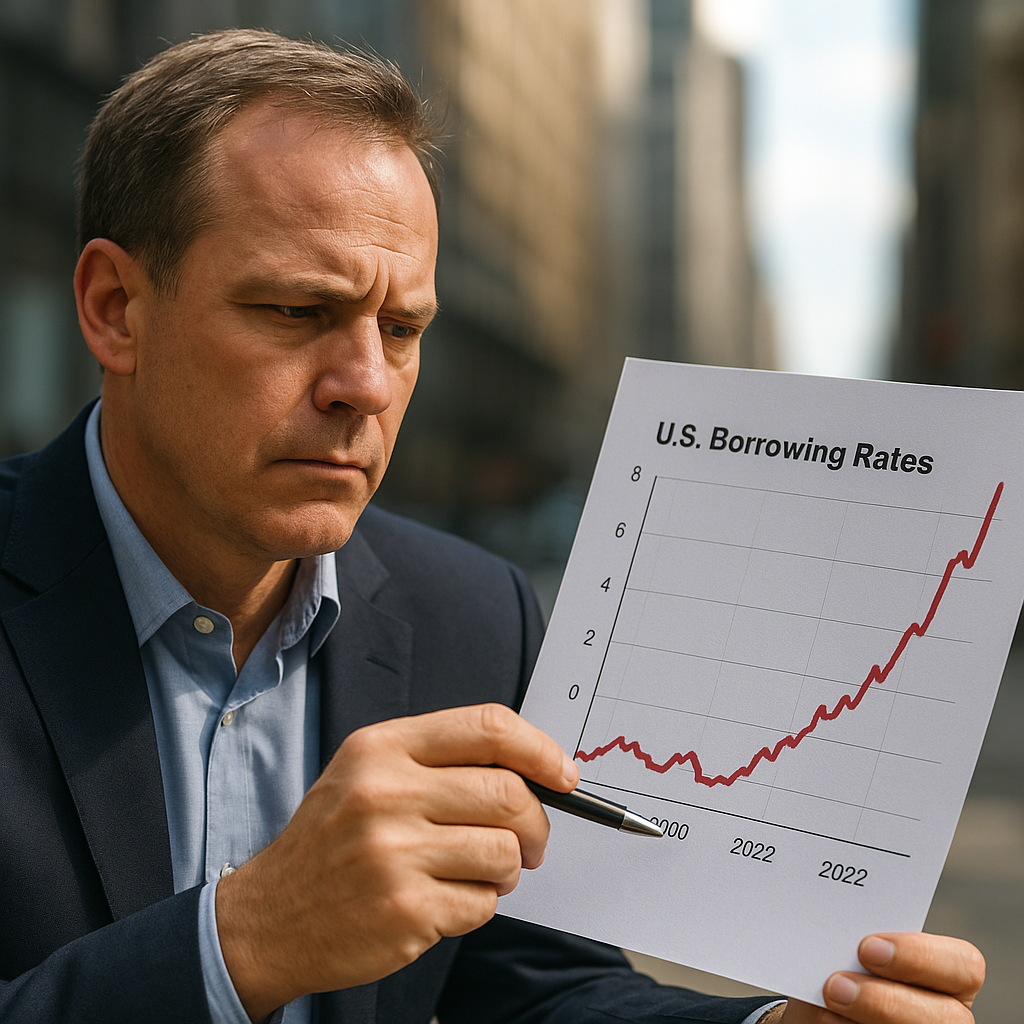
- The 10-year Treasury yield — a key driver of mortgage and loan rates — is approaching a roughly 20-year high.
- Volatile oil prices, tied partly to Middle East tensions involving Iran, are fueling inflation fears that push yields higher.
- Higher borrowing rates mean pricier mortgages and loans for consumers, but potentially better returns for savers.
What's Actually Happening
The yield on the 10-year U.S. Treasury note — basically the benchmark that sets the tone for mortgage rates, auto loans, and business borrowing costs nationwide — is pushing toward levels not seen in roughly two decades. At the same time, oil prices are whipsawing, with tension in the Middle East (Iran factors prominently) adding fresh uncertainty to energy markets. These two stories are tangled together: when oil prices jump, inflation fears rise, and when inflation fears rise, investors demand higher yields to hold long-term government debt.
Think of the 10-year yield as the invisible hand behind your monthly bills. It doesn't show up on a receipt, but it quietly shapes what banks charge you to borrow money. When it climbs, everything downstream — from a 30-year mortgage to a small business loan — tends to get more expensive.
Why Oil Is Part of This Story
Oil price swings matter here because energy costs feed directly into inflation expectations. A spike in crude prices (often tied to geopolitical risk, like instability involving Iran) raises fears that inflation could reaccelerate. That makes bondholders nervous — they don't want to lock in a fixed return for a decade if prices might erode its value. So they sell bonds, prices fall, and yields (which move opposite to price) climb higher.
Add in a Federal Reserve that's been walking a tightrope between fighting inflation and avoiding a slowdown, and you get a bond market that's especially sensitive to every oil headline right now.
What It Means for You
If you're house-hunting, this is the number quietly working against you every time mortgage rates get quoted. If you're a saver, higher yields on government debt can actually mean better returns on things like CDs and money market accounts — a rare silver lining. If you run a small business or carry variable-rate debt, borrowing just got more expensive, and it's worth locking in fixed rates where you can.
The bigger picture: near-20-year-high borrowing rates aren't just a Wall Street headline. They ripple into everyday affordability — what home you can afford, how much your car payment is, and how businesses plan hiring and expansion. Combined with volatile oil prices, it's a signal that markets are bracing for more turbulence, not less, in the months ahead.
Bottom line: keep an eye on both numbers together. Oil and bond yields are talking to each other right now, and the conversation is shaping the cost of money for everyone.
Why it matters
Rising borrowing rates directly affect what you pay for a mortgage, car loan, or credit card balance, even if you never look at a bond chart. Understanding the oil-yield connection helps you anticipate where rates — and your monthly bills — might be headed next.
Want deals on what you love?
Val finds local offers matched to your interests — free to start.
Meet Val